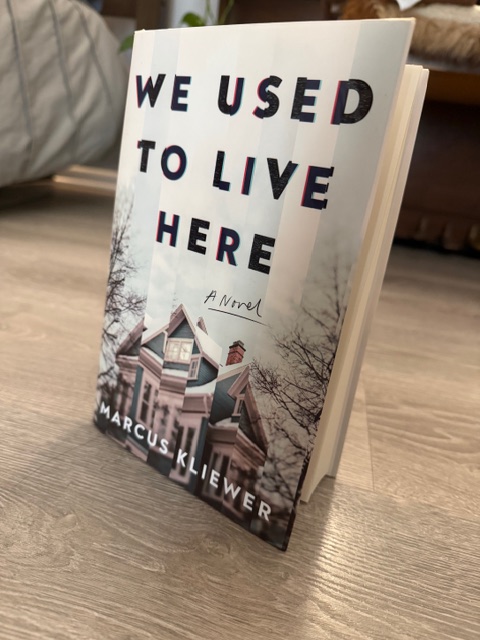
I’d been in a reading slump for a couple of months before I picked up this novel. I wanted something unique, mind-bending, and creepy, and nothing I’d been picking up for the past couple of weeks was really speaking to me. Then, one day, I came across a horror book discussion video by one of my favorite streamers on YouTube, Gab Smolders, in which she mentioned Marcus Kliewer’s debut novel, We Used to Live Here. Despite her C-tier rating, I was immediately intrigued when she described the plot.
The novel is centered around a lesbian couple, Eve and Charlie, who buy an old, secluded house in the woods of the Pacific Northwest, with plans to flip it. Then one day, during the brink of a snowstorm, a family shows up at their doorstep. The father, claiming to have lived in the house years before, asks to be invited in to show his children around and relive old memories. Eve, a chronic people-pleaser at heart, decides to let them in. Sigh.
What should have started out as a quick tour turns into a prolonged and very bizarre ordeal. The family becomes increasingly more suspicious and invasive, and the home begins to change right before Eve’s eyes. Pretty quickly, everything she thought she knew about herself and the world she lives in starts to unravel.
I can’t even begin to describe how unsettlingly puzzling this book is, and I mean that in the best way possible. The lines between reality and imagination were quickly blurred, and I was constantly questioning everything. The characters, the setting, and everything in between exuded this sense of trickery and delusion. I wasn’t sure who or what was real, who was malicious, and who was benevolent. The author did a truly remarkable job of this, of both building this world and distorting it. I also loved the “lost files” method of storytelling used in this novel, from the morse code to the recovered documents between chapters that enriched and connected the many points of the story as it goes on.
The language is very descriptive and succeeds in creating that sense of unease. Themes like religious trauma, memory, and trust were woven so well into such a complex storyline.
Eve makes for a likeable, and slightly stress-inducing, protagonist. I just couldn’t help but shake my head at her decision to let the family into her home. I mean, really, in what world would that seem like a good idea?! Her inability to trust her instincts and set sufficient boundaries frustrated me to no end.
Admittedly, however, I too grew up with some people-pleasing tendencies, so I couldn’t help but relate to her on some level. Not on the level of letting a bunch of strangers into my home, but then again, we can’t all be so hospitable.
By the end of the novel, I couldn’t help but ask myself, “What just happened? Where’s the rest??” Like many other readers, I was disappointed by this, but it’s not something that dampened the overall experience for me. About halfway through the novel, I decided the best thing to do was to go with whichever way the story decided to take me, and I’m happy I did.
For anyone looking to read this book, I recommend that you go in completely blind. At least in the case of this novel, I believe that some questions might just be better left unanswered.
Also, I know that Marcus Kliewer’s next novel is set to come out this spring, and that it will not be centered on Eve, but will take place in the same universe. If you couldn’t already tell, I will absolutely be reading it, and I’m sure it’ll provide more of the same mind-bending storytelling I loved in this one.
 Quick Margins
Leave a comment